RESEARCH · IDEAS · THINGS I BUILD

Hello, I'm
Qing He 贺青若.

I’m a Senior Staff Research Scientist
working on speech and conversational AI.

I’m at Meta, Super-Intelligence Lab, where I work on natural, expressive voice experiences and the systems that bring them to life. My work spans conversational speech, multilingual text-to-speech, and efficient inference across servers and devices.

I joined Meta in April 2017. I earned my Ph.D. and M.S. in Electrical Engineering and Computer Science from MIT, and my B.S. in Electrical Engineering from the University of Waterloo.

CURRENT INTERESTS
Conversational AISpeech generationEfficient inference
02 / SELECTED WORK

Projects

From research to real experiences.

Building natural, expressive voice experiences—and the systems that make them possible.

A white, furry Muse avatar character from Meta’s realtime avatar demonstration.
01 EXPRESSIVE AI

Muse Avatar

Muse Realtime Avatar brings characters to life in live conversations, synchronizing speech with expressive facial and full-body animation.

My contribution I drove improvements in speech naturalness and expressiveness, helping Muse’s avatars speak with a more lifelike, engaging voice.
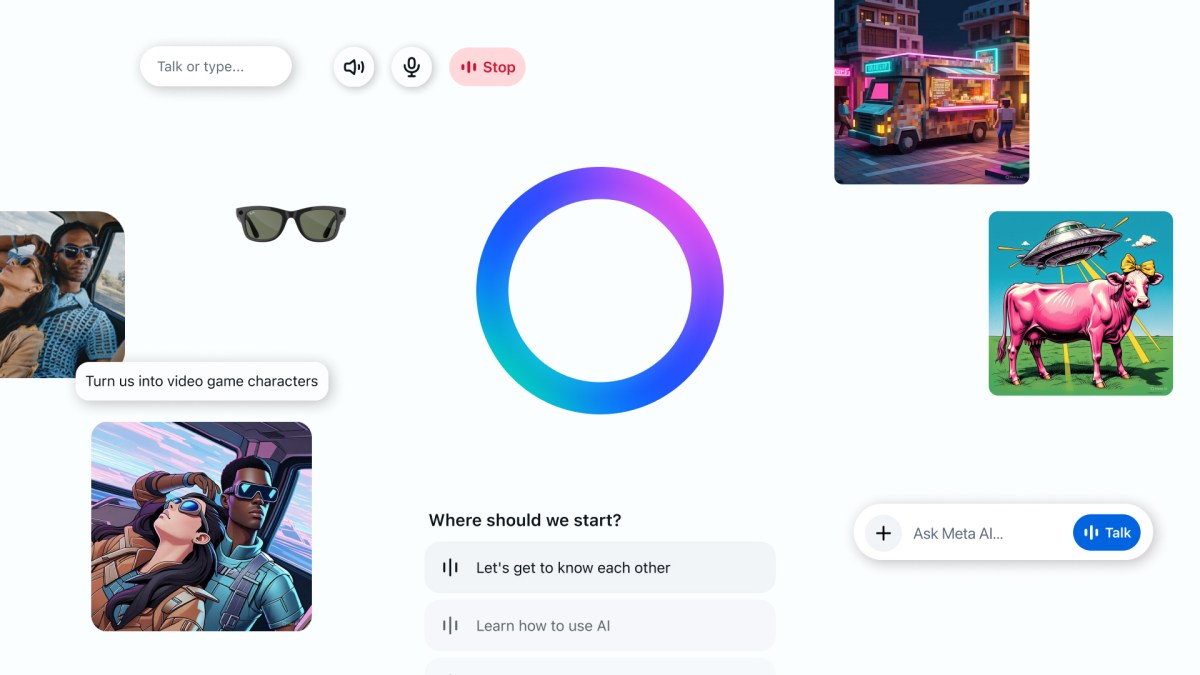

Meta AI app launch imagery featuring the gradient AI ring and voice interface.
02 CONVERSATIONAL AI

Meta AI Full-duplex Voice

The Meta AI app introduced a full-duplex voice demo that generates speech directly from conversational dialogue, enabling more natural spoken interactions.

My contribution I helped develop full-duplex voice technology for Meta AI, shaping a more fluid, spontaneous experience that feels closer to human conversation.

A person wearing black Ray-Ban Meta smart glasses, photographed for the official launch.
03 WEARABLES & DEVICES

Voice for Meta Hardware

Voice experiences across Ray-Ban Meta glasses, Oculus/Quest, and Portal—connecting smart glasses, mixed reality, and home devices through speech.

My contribution I led development of text-to-speech voices for Meta’s hardware devices, spanning server and on-device deployment. The work brought together multilingual support and a broad range of voice capabilities across Ray-Ban Meta glasses, Oculus, and Portal.

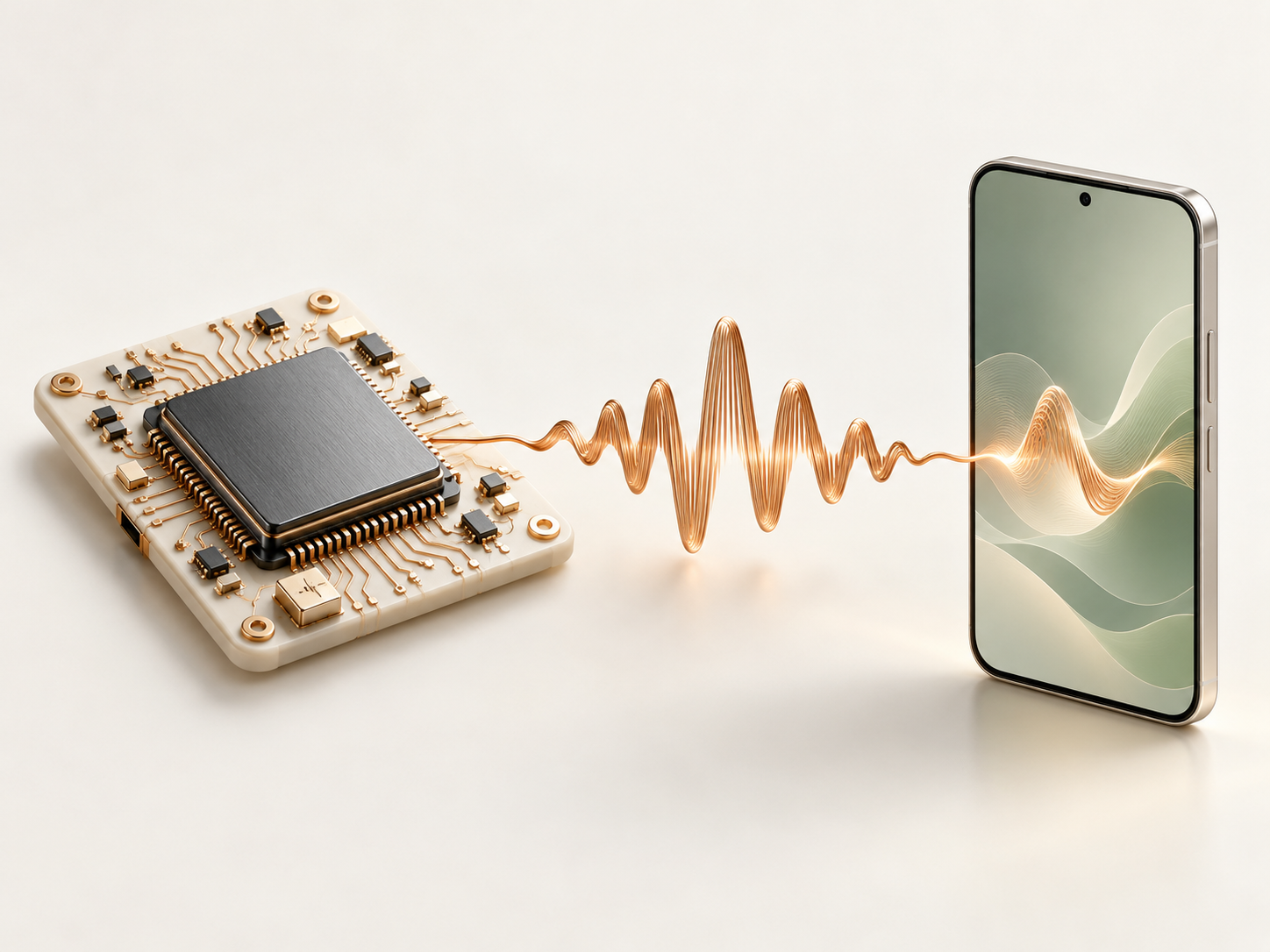
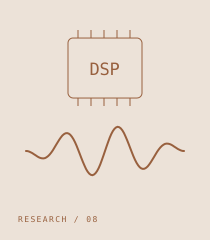
Conceptual illustration of a processor and mobile device connected by an audio waveform.
05 MODELS TO PRODUCTION

Efficient AI Inference

Model and runtime optimization for real-time speech synthesis, from efficient CPU-based serving to lightweight mobile deployment.

My contribution I worked extensively on inference optimization across server GPUs and mobile edge devices, making high-quality models practical within the compute and latency constraints of real products.

Product imagery: Meta · Inference illustration: AI-generated

03 / WRITING & RESEARCH

Recent publications

2024–2026

Recent work on speech, language, and the models that connect them. Full list on Google Scholar

2026 SPOKEN REASONING

Spoken Language Models that Think Aloud

SLT 2026 · Accepted

An asynchronous speech framework lets a model share short progress updates while it continues reasoning. Coordinating a reasoning stream with a lightweight speaking stream reduces audible silence while preserving answer accuracy in spoken reasoning and question answering.

Authors

Junyi Ao, Kainan Peng, Mingbo Ma, Shun Zhang, Zhenyu Tang, Xutai Ma, Xiang Li, Yinghao Li, Yuancheng Wang, Zhizheng Wu, Haizhou Li, Qing He, Xubo Liu

2026 SPEECH EVALUATION

GSRM: Generative Speech Reward Model for Speech RLHF

arXiv · Preprint

A speech reward model evaluates naturalness through acoustic features and explicit reasoning, making its judgments easier to interpret. Trained with expert feedback, it aligns closely with human ratings and can guide reinforcement learning toward more natural speech.

Authors

Maohao Shen, Tejas Jayashankar, Osama Hanna, Naoyuki Kanda, Yancheng Wang, Kateřina Žmolíková, Ruiming Xie, Niko Moritz, Anfeng Xu, Yashesh Gaur, Gregory Wornell, Qing He, Jilong Wu

2026 SPEECH REPRESENTATIONS

Scaling Speech Tokenizers with Diffusion Autoencoders

ICLR 2026

SiTok combines semantic representation learning with diffusion-based audio reconstruction. Scaling the tokenizer improves speech understanding, reconstruction, and generation while operating at just 12.5 tokens per second and 200 bits per second.

Authors

Yuancheng Wang, Zhenyu Tang, Yun Wang, Arthur Hinsvark, Yingru Liu, Yinghao Li, Kainan Peng, Junyi Ao, Mingbo Ma, Mike Seltzer, Qing He, Xubo Liu

2026 SPEECH & EMOTION

VowelPrompt: Hearing Speech Emotions from Text via Vowel-level Prosodic Augmentation

ICLR 2026

VowelPrompt translates vowel-level pitch, energy, and duration into natural-language cues. These cues help language models recognize emotion using both the words and how they are spoken, with explanations grounded in prosody and context.

Authors

Yancheng Wang, Osama Hanna, Ruiming Xie, Xianfeng Rui, Maohao Shen, Xuedong Zhang, Christian Fuegen, Jilong Wu, Debjyoti Paul, Arthur Guo, Zhihong Lei, Ozlem Kalinli, Qing He, Yingzhen Yang

2025 VOICE CONVERSION

SemAlignVC: Enhancing Zero-shot Timbre Conversion Using Semantic Alignment

Speech Synthesis Workshop 2025

SemAlignVC aligns text and audio representations to separate linguistic content from speaker identity. This reduces leakage of the original speaker’s timbre during zero-shot voice conversion, improving target-voice similarity, intelligibility, and naturalness.

Authors

Shivam Mehta, Yingru Liu, Zhenyu Tang, Kainan Peng, Vimal Manohar, Shun Zhang, Mike Seltzer, Qing He, Mingbo Ma

2025 SPEECH GENERATION

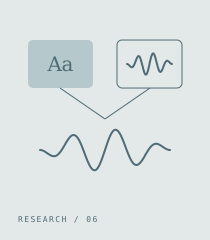
Get Large Language Models Ready to Speak: A Late-fusion Approach for Speech Generation

ICASSP 2025

TTS-Llama adapts a language model for speech synthesis. MoLE-Llama then combines text and speech through parameter-efficient late fusion and a mixture-of-experts design, supporting spoken responses while retaining text question-answering capabilities.

Authors

Maohao Shen, Shun Zhang, Jilong Wu, Zhiping Xiu, Ehab AlBadawy, Yiting Lu, Mike Seltzer, Qing He

2024 FOUNDATION MODELS

The Llama 3 Herd of Models

arXiv · Technical report

A technical report on the Llama 3 family of multilingual models for coding, reasoning, and tool use. It describes training and evaluation at scale, including a 405-billion-parameter model, and explores adding image, video, and speech capabilities.

Authors

Aaron Grattafiori et al. (including Qing He; see the paper for the complete author list)

2024 TEXT-TO-SPEECH

Multi-Task Learning for Front-End Text Processing in TTS

ICASSP 2024

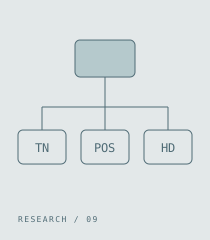
A shared model handles text normalization, part-of-speech tagging, and ambiguous-word pronunciation together. Combining shared representations with task-specific heads improves overall performance, while a balanced homograph dataset strengthens pronunciation disambiguation.

Authors

Wonjune Kang, Yun Wang, Shun Zhang, Arthur Hinsvark, Qing He

Research papers and preprints from the past three years · Updated October 2026

04 / SAY HELLO

Let’s connect.

For research conversations, collaborations,
or just to say hello.